
At Marietta Silos, our silos are designed with the support of a silo engineer to meet industry requirements. Our engineering approach is aligned with the methods used by our construction crews, including Jumpform and Slipform systems, ensuring a coordinated process from design through construction.
All silos are designed to meet the current silo design code, American Concrete Institute (ACI) 313-16: Design for Concrete Silos and Stacking Tubes for Storing Granular Materials. Marietta Silos is a member of the ACI Committee, keeping our team aligned with the latest industry standards and updates.
Concrete silos must be designed around the materials they will store. Cement silos and by-product silos, for example, can vary significantly in size, wall thickness, cone construction, material handling, equipment and flow patterns.
No matter your silo type, Marietta Silos will help you determine the most effective design for your material and build a silo that ensures its safety.
Aggregate silos feature a cone-bottom design, with the cone shape and flow pattern specified to support proper storage and material flow. Our in-house experts guide you through the design options to ensure your concrete silo is safe, economical and built to last.
By-product silos are designed based on the specific material being stored, as storage requirements can vary significantly. The design accounts for material characteristics, handling needs and flow requirements to ensure proper performance.
Marietta Silos designs and constructs concrete silos for the storage and distribution of various types of cement. Each silo is engineered to support safe storage, reliable flow and long-term performance.
Coal silos require experience and technical knowledge to deliver a safe and economical solution. These silos are typically designed with a cone bottom and mass flow to keep material moving efficiently.
Marietta Silos is a leading constructor of concrete fly ash silos in the United States, with extensive experience supporting major power utilities and contractors. We also design and build silos for bottom ash and pelletized fly ash storage applications.
Grain silos for flour, grain and grain products are designed with a sealed interior to help prevent spoilage. A demountable silo base allows easier access for material removal.
Lime silos commonly feature a conical hopper in the base to help ensure proper material flow. Each silo is designed to support efficient storage and consistent discharge.
Material flow is influenced by silo construction, cone angles and the type of material being stored. Together, these factors determine how material moves through a storage silo and how efficiently it can be discharged.

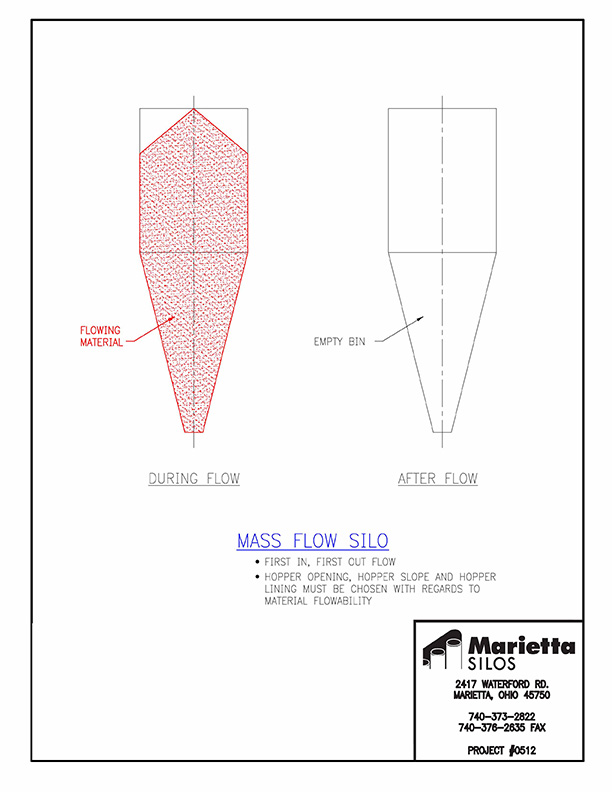
Mass flow silos are designed to eliminate common material flow issues associated with funnel flow. In a mass flow design, stored material moves downward uniformly as a column, with no stagnant zones or flow channels. This ensures a true first-in, first-out (FIFO) discharge pattern.
Because all material is in motion during discharge, mass flow is ideal for materials prone to segregation based on particle size or density. It is also well-suited for handling combustible, cohesive, or perishable materials, such as coal, where consistent flow and turnover are critical.
Mass flow is achieved through proper hopper design, including steep cone angles typically ranging from 68 to 72 degrees, depending on the material’s flow properties. To further improve flow performance, hoppers can be lined with low-friction materials such as stainless steel with a 2B finish.
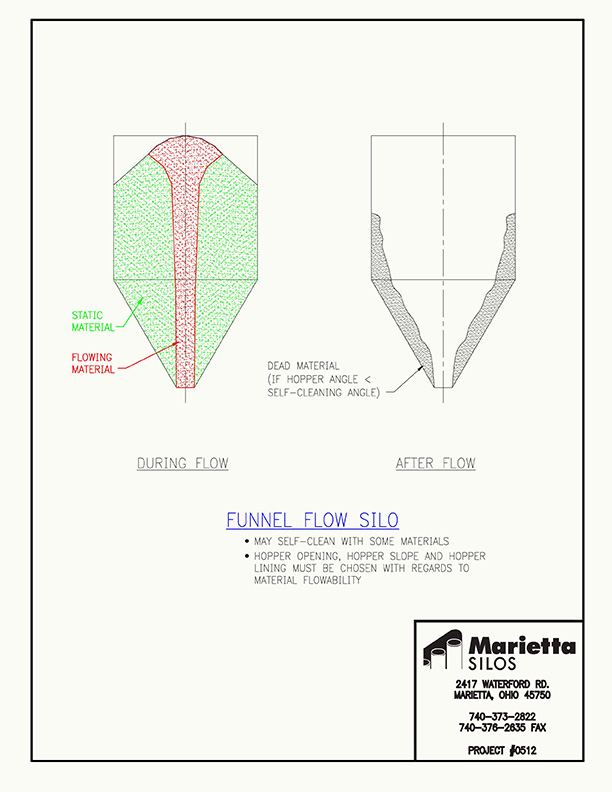
Funnel flow silos are a more cost-effective option, typically costing 20–30% less than mass flow designs. However, they are not suitable for all bulk materials.
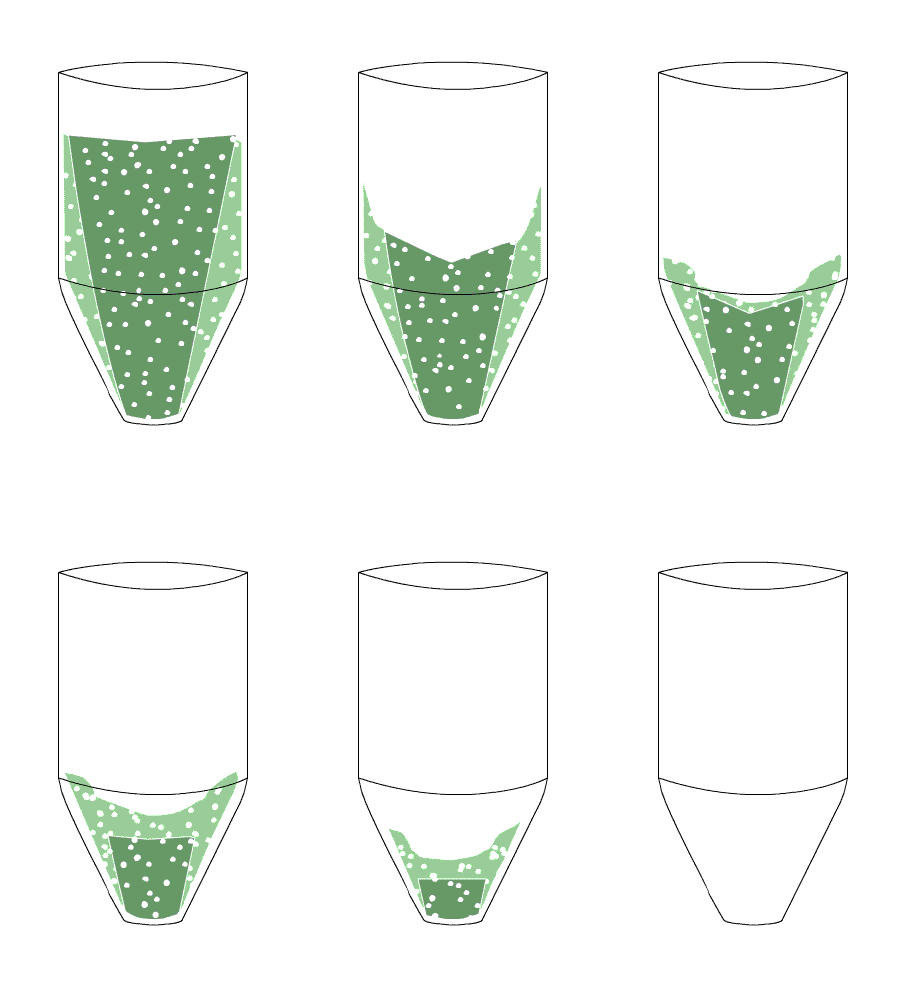
In a funnel flow design, material discharges through a central channel, with the material in the middle flowing first. Material along the silo walls remains stagnant until the silo is nearly empty, then gradually moves into the flow channel.
This flow pattern can lead to material buildup, ratholing, and irregular flow, especially if the silo is not emptied regularly. Over time, stagnant material along the walls may compact or degrade.
Funnel flow silos typically use hopper angles between 45 and 60 degrees, depending on the material being stored.
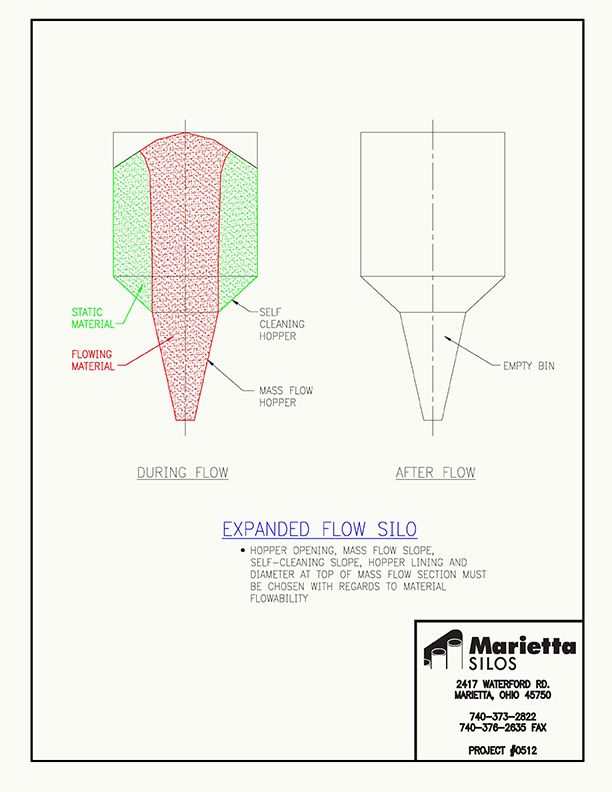
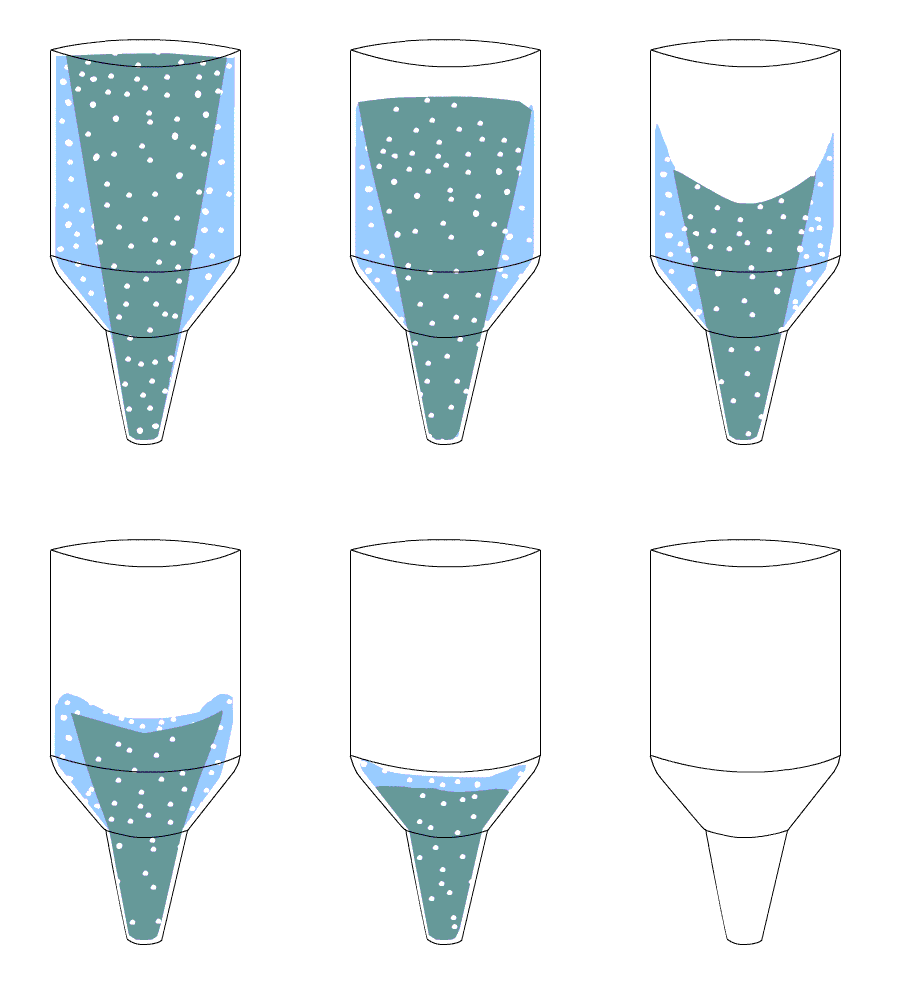
Expanded flow silos are commonly used in large-diameter storage applications where long-term storage is not required. This design combines elements of both mass flow and funnel flow to improve material movement while maintaining a more economical structure.
In an expanded flow silo, a mass flow hopper is positioned beneath a larger funnel flow section. This configuration helps reduce the risk of ratholing and improves material discharge compared to traditional funnel flow designs, especially in large silos.
While expanded flow provides improved flow performance, it still benefits from periodic emptying to prevent stagnant or “dead” material buildup along the silo walls.
Expanded flow silos typically feature upper hopper angles between 45 and 60 degrees, transitioning into a steeper mass flow cone with angles between 68 and 72 degrees.
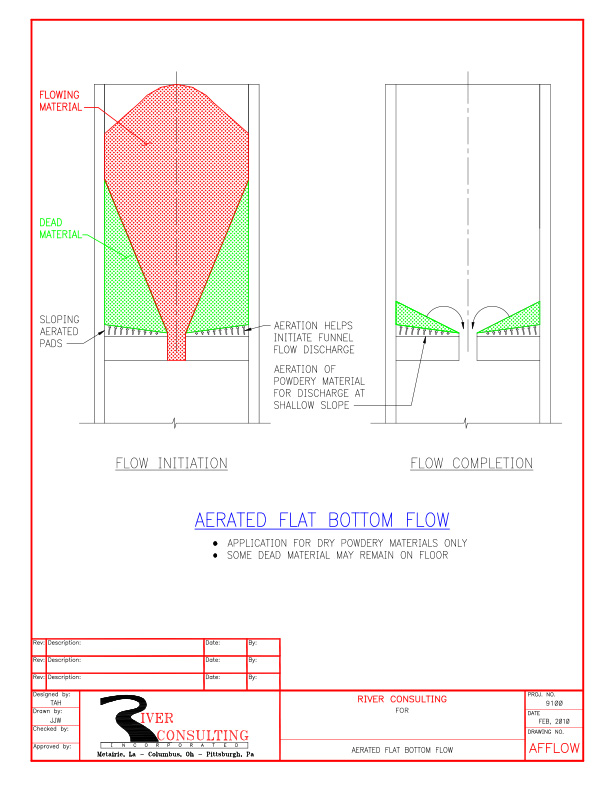
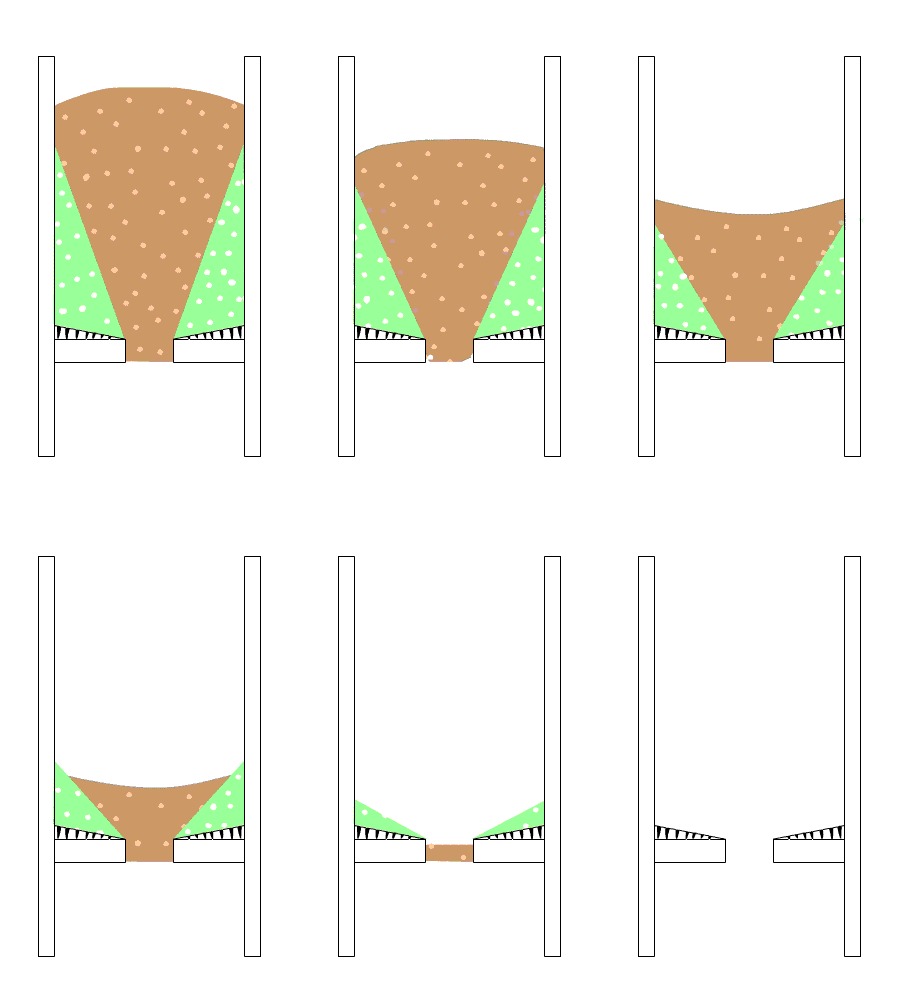
Fluidized flow silos are designed for handling fine powders and materials that do not flow easily under normal conditions. In this design, air is introduced at the base of the silo to aerate the stored material, causing it to behave more like a fluid.
This fluid-like behavior allows material to flow more freely, even at very shallow hopper angles, improving discharge in applications where traditional gravity flow is not sufficient.
However, fluidized flow is not suitable for all materials. For example, it should not be used for coal or other combustible materials, as the introduction of oxygen can increase the risk of spontaneous combustion.
Fluidized flow silos typically operate with discharge angles between 5 and 10 degrees, significantly shallower than other flow patterns.
Slipform silo construction is typically preferred for large-diameter concrete storage silos exceeding 65 feet. This method uses a continuous, monolithic concrete pour, creating a seamless wall structure with a smooth exterior finish and enhanced structural integrity.
Because Slipform construction requires an uninterrupted 24-hour schedule, crews work continuously until the structure reaches full height. While this accelerated wall-forming process can reduce vertical build time, it requires a custom-built form system for both interior and exterior surfaces, along with specialized equipment and round-the-clock labor.
The Slipform system integrates interior work decks and finishing scaffolding supported by hydraulic jacks and vertical jack rods. As the forms gradually rise — approximately one foot per hour — crews simultaneously place reinforcing steel, embedments, and fresh concrete while finishing exposed wall surfaces. This coordinated process produces a structurally continuous concrete silo engineered for durability and high-capacity industrial applications.
Slipform construction is often the optimal choice for silos exceeding 65 feet in diameter or for projects requiring multiple large-scale structures constructed concurrently.
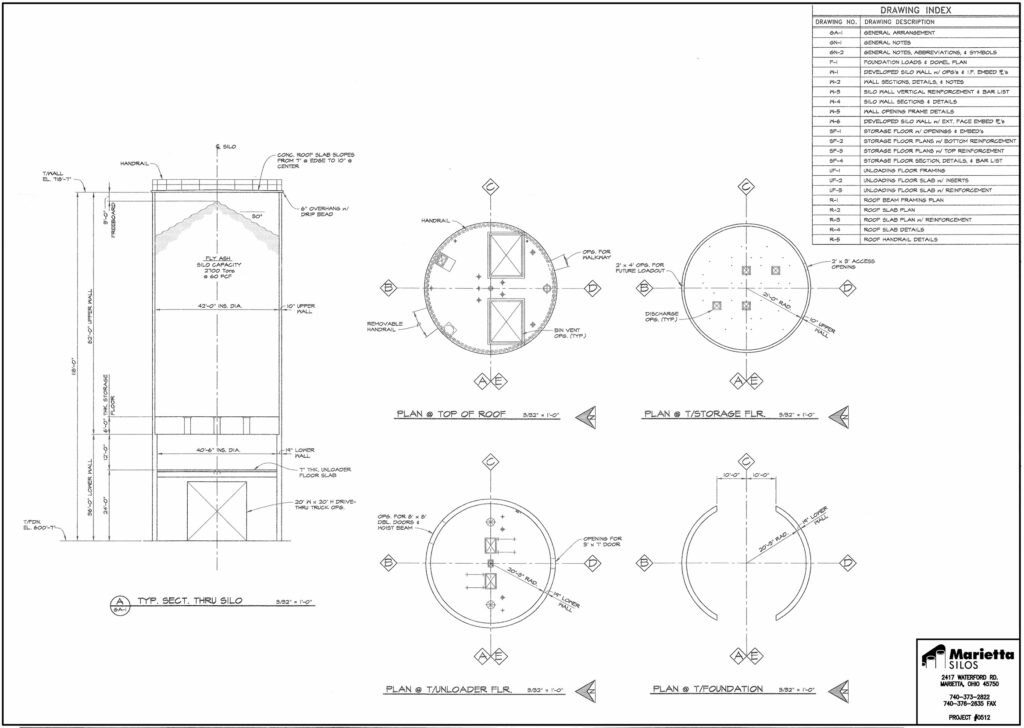
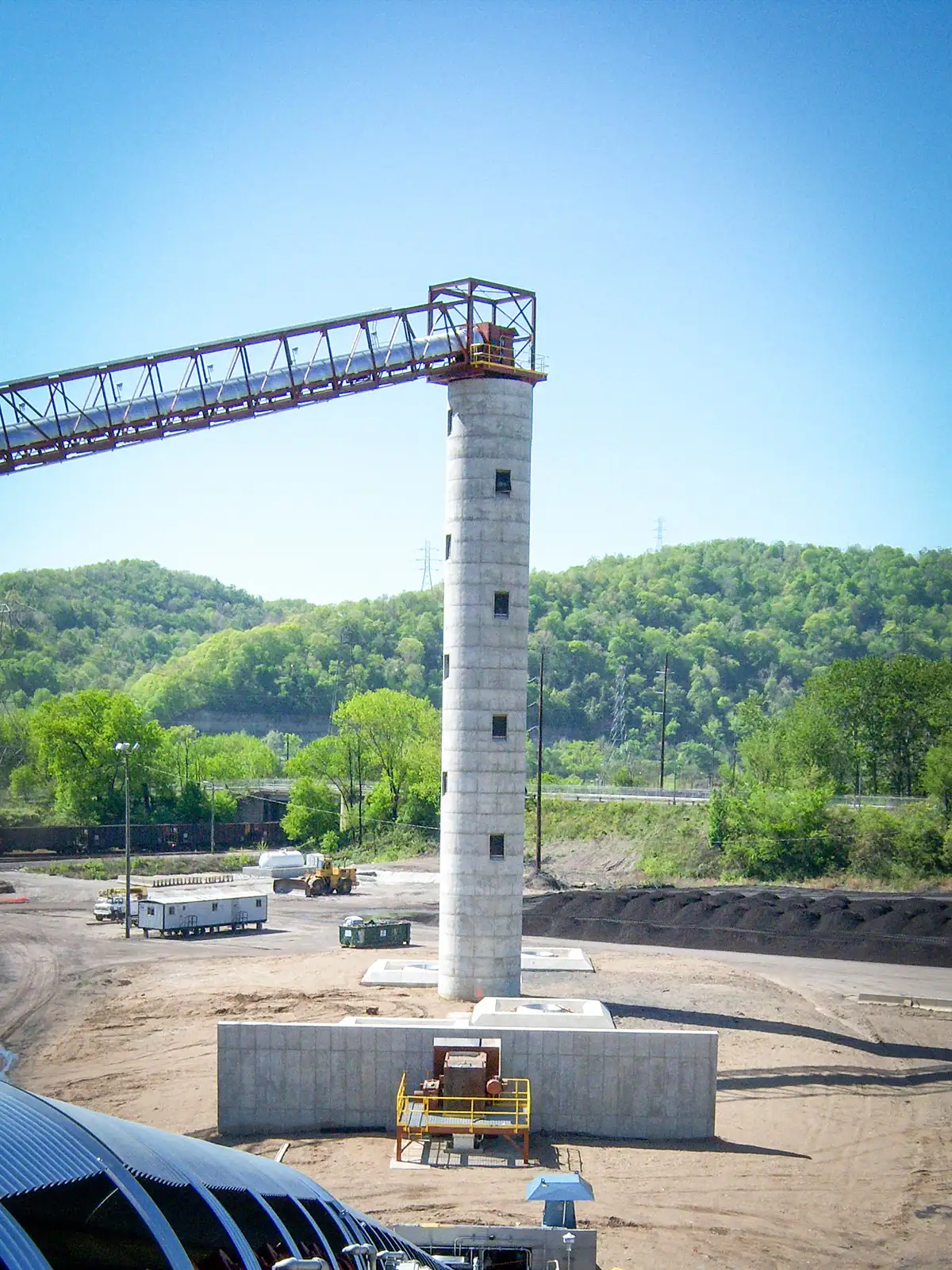
Selecting the correct silo size and configuration starts with understanding how your material behaves during storage and discharge. Different materials require different silo types, including flat bottom, cone bottom, mass flow, funnel flow, or expanded flow designs. Factors such as flowability, density, and moisture content all influence performance and overall efficiency.
If material behavior is unknown, a flow study can provide critical data to determine the most effective silo design and ensure reliable material handling. If you need additional guidance, our team can help evaluate your material and recommend the right solution.
To commission a new silo, start with a consultation to determine your storage material, size, and operational needs. Marietta Silos works with clients to design and engineer concrete or steel silos that meet performance, safety, and efficiency requirements, providing a clear plan before construction begins.
Silo design considers material type, storage volume, wall thickness, foundation, and safety features. Expert engineers calculate load, pressure, and environmental factors to ensure a structurally sound, durable, and efficient silo.
Silos require a reinforced concrete foundation designed to support the silo’s weight and stored material. Foundations must account for soil type, load distribution, drainage, and environmental conditions to prevent settling or structural failure.
Collapse is prevented through proper design, high-quality construction, regular inspection, and maintenance. Using correct materials, wall thickness, and foundation support ensures long-term structural integrity.
Silo size depends on storage volume, material type, and operational requirements. Marietta Silos prefers a 3-to-1 height-to-diameter ratio, though this may be adjusted in highly seismic locations. Engineers at Marietta Silos can calculate the optimal dimensions for your application, and silo sizing calculators are available on the Marietta Silos website as a starting point.
OSHA requires compliance with confined space safety, fall protection, structural safety standards, and proper maintenance. Following OSHA regulations protects workers during construction, inspection, and operation.
Silos collapse due to foundation failure, wall cracks, overloading, material bridging, corrosion, or, especially in the case of steel silos, extreme weather. Regular inspection and maintenance significantly reduce collapse risk.
Cracks are caused by foundation settling, temperature fluctuations, moisture infiltration, overloading, or construction defects. Early detection prevents structural failure and costly repairs.
Damaged silos are repaired by patching concrete cracks, reinforcing walls, replacing steel panels, fixing roofs, and applying protective coatings. Repairs restore structural integrity and extend service life.