
Marietta Silos provides comprehensive silo restoration and repair services for all types of silo construction. Without proper inspection and ongoing maintenance, silos are subject to deterioration and potential structural failure. Our team delivers complete restoration solutions, combining design, engineering, and construction expertise to address damage, extend service life, and reduce the need for new silo construction.
With more than 100 years of experience, we identify the root cause of deterioration and incorporate those findings into every restoration approach to help prevent future issues. Whether addressing emergency repairs or planned restoration projects, our team is equipped to respond quickly and deliver reliable, long-term results.
Marietta Silos provides restoration and repair services for a wide range of silo types, regardless of the material being stored. Our team has extensive experience working with both concrete and steel silos, addressing a variety of structural and maintenance challenges.
Structurally unsound silos can compromise safety and performance. Marietta Silos provides restoration and modification services for a wide range of structures and stored materials, delivering efficient, cost-effective solutions to resolve structural issues.
Gunite is applied using air pressure to create a strong, durable surface comparable to poured concrete. It offers resistance to weather and chemicals while bonding effectively to properly prepared surfaces.
Rehooping restores the structural integrity of concrete stave silos by repairing or replacing damaged or corroded hoops. This process helps maintain storage capacity and supports long-term performance.
Composite fiber reinforcement systems strengthen existing concrete and masonry structures. Marietta Silos installs Wabo® Composite Systems using specialized fibers and resins designed for durability, chemical resistance, and surface application without heavy equipment.
Silo and tank liners help restore structural integrity, seal surfaces, and prevent material contamination. Marietta Silos offers a range of liner options including concrete, steel, stainless steel, epoxy, PVC, and waterproof coatings.
Roof beams are supported by beam pockets within the silo structure. Spalling or deterioration in these areas can weaken support and lead to roof failure if not properly repaired.
Concrete damage such as cracking, spalling, and delamination requires identifying the root cause. Marietta Silos restores damaged areas and uses A.I. Supplemental Inspection to improve defect mapping and track changes over time.
Silos repurposed for different materials may require modifications to handle increased loads. Without proper remediation, added stress from heavier materials and operational forces can lead to structural failure.
Silo roofs are exposed to environmental and operational stress, including overfilling, overloading, and weather conditions. Restoration helps protect stored materials and maintain structural integrity.
Marietta Silos provides safe and efficient silo dismantling using modern demolition techniques. Our team manages dismantling projects across a variety of silo types while maintaining a controlled and secure work environment.
Outdated discharge cone designs, such as steel suspended cones, carry a higher risk of failure. Remediation helps reduce risk and prevent collapse caused by unsupported or deteriorating cone systems.
Steel silo restoration includes replacing worn or corroded sections and relining damaged areas. Marietta Silos provides design and engineering support to ensure safe, reliable performance.
Post-tensioning is used to address spalling, cracking, and wall separation caused by overstressed reinforcing. High-strength strands are installed around the silo exterior to restore structural capacity.
Post-tensioning is used to address spalling, cracking, and wall separation caused by overstressed reinforcing. High-strength strands are installed around the silo exterior to restore structural capacity.

Part of the Marietta Group, USA Silo Service specializes in silo cleaning, inspection, and maintenance. Their team helps keep your silo operating safely and efficiently with services designed to reduce risk and improve performance.
Your Complete Silo Solution. Just One Number. SILO ONE CALL 800-633-9969

Routine silo maintenance is essential to preserving performance, extending service life, and preventing costly repairs. Without a consistent inspection and maintenance program, silos are subject to wear from environmental conditions, material loading, and daily operation.
USA Silo Service, part of the Marietta Group, provides professional inspection and maintenance programs designed to identify early signs of deterioration and help maintain safe, reliable operation.
Slipform silo construction is typically preferred for large-diameter concrete storage silos exceeding 65 feet. This method uses a continuous, monolithic concrete pour, creating a seamless wall structure with a smooth exterior finish and enhanced structural integrity.
Because Slipform construction requires an uninterrupted 24-hour schedule, crews work continuously until the structure reaches full height. While this accelerated wall-forming process can reduce vertical build time, it requires a custom-built form system for both interior and exterior surfaces, along with specialized equipment and round-the-clock labor.
The Slipform system integrates interior work decks and finishing scaffolding supported by hydraulic jacks and vertical jack rods. As the forms gradually rise — approximately one foot per hour — crews simultaneously place reinforcing steel, embedments, and fresh concrete while finishing exposed wall surfaces. This coordinated process produces a structurally continuous concrete silo engineered for durability and high-capacity industrial applications.
Slipform construction is often the optimal choice for silos exceeding 65 feet in diameter or for projects requiring multiple large-scale structures constructed concurrently.
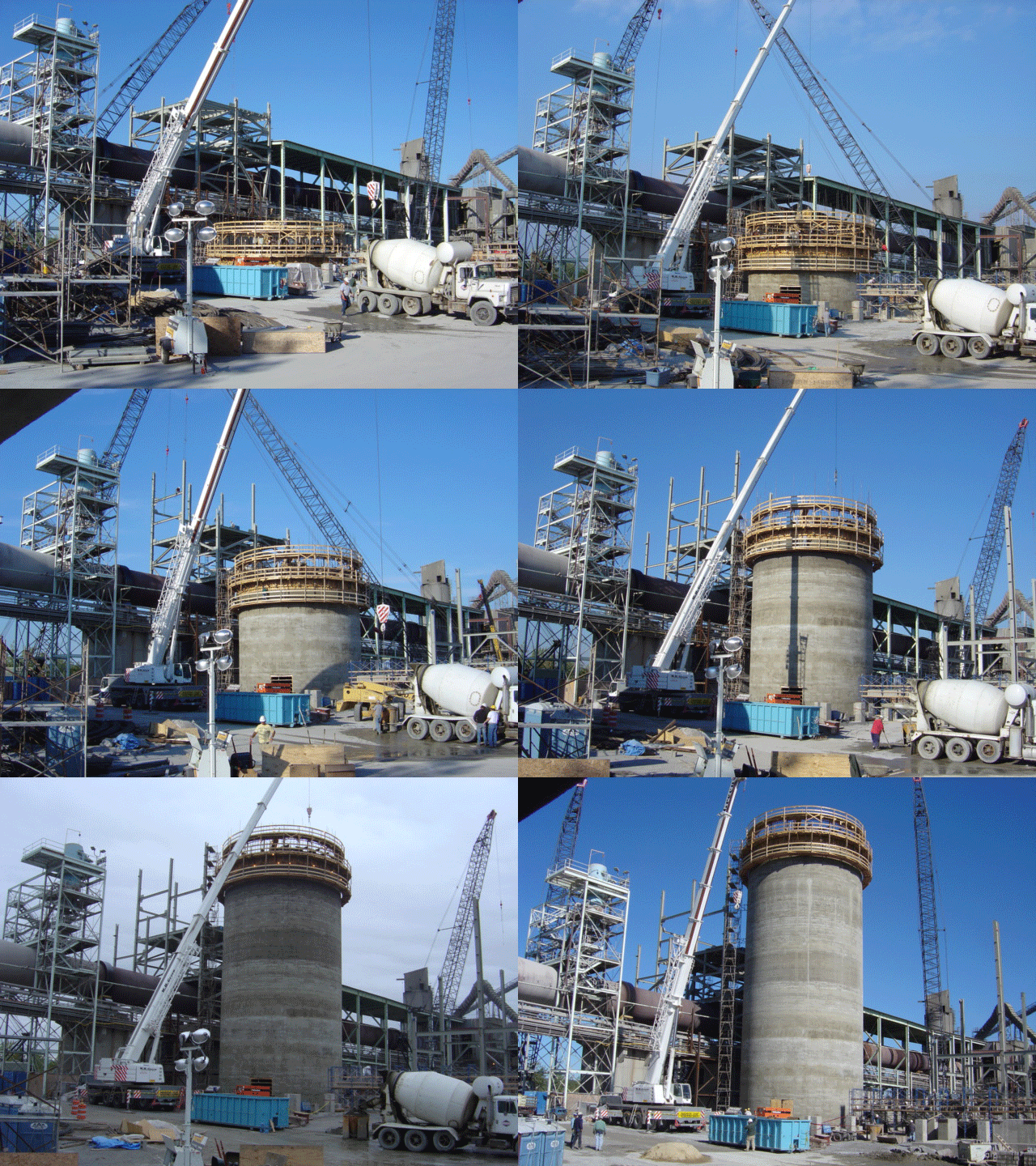
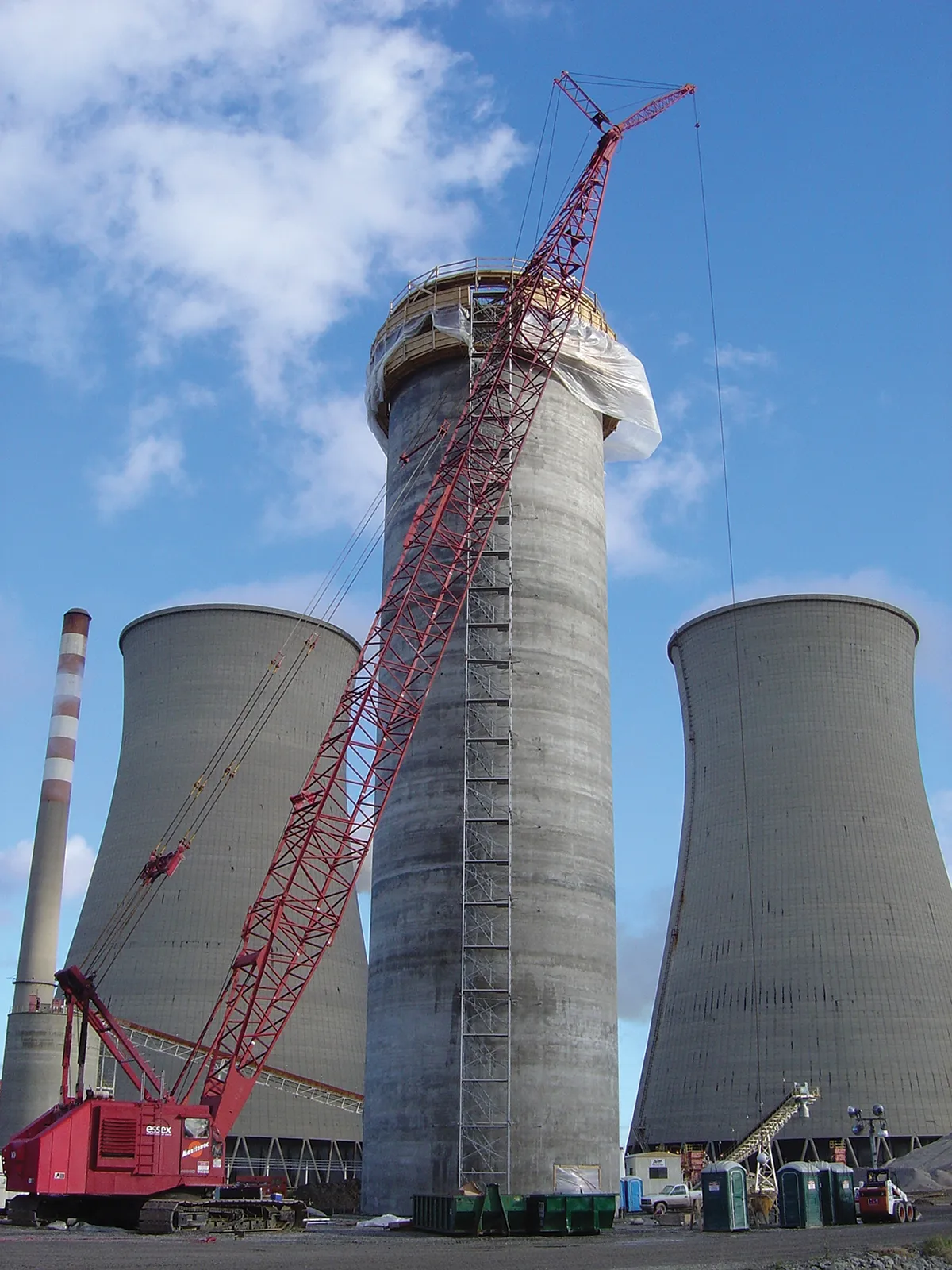
Slipform silo construction is typically preferred for large-diameter concrete storage silos exceeding 65 feet. This method uses a continuous, monolithic concrete pour, creating a seamless wall structure with a smooth exterior finish and enhanced structural integrity.
Because Slipform construction requires an uninterrupted 24-hour schedule, crews work continuously until the structure reaches full height. While this accelerated wall-forming process can reduce vertical build time, it requires a custom-built form system for both interior and exterior surfaces, along with specialized equipment and round-the-clock labor.
The Slipform system integrates interior work decks and finishing scaffolding supported by hydraulic jacks and vertical jack rods. As the forms gradually rise — approximately one foot per hour — crews simultaneously place reinforcing steel, embedments, and fresh concrete while finishing exposed wall surfaces. This coordinated process produces a structurally continuous concrete silo engineered for durability and high-capacity industrial applications.
Slipform construction is often the optimal choice for silos exceeding 65 feet in diameter or for projects requiring multiple large-scale structures constructed concurrently.
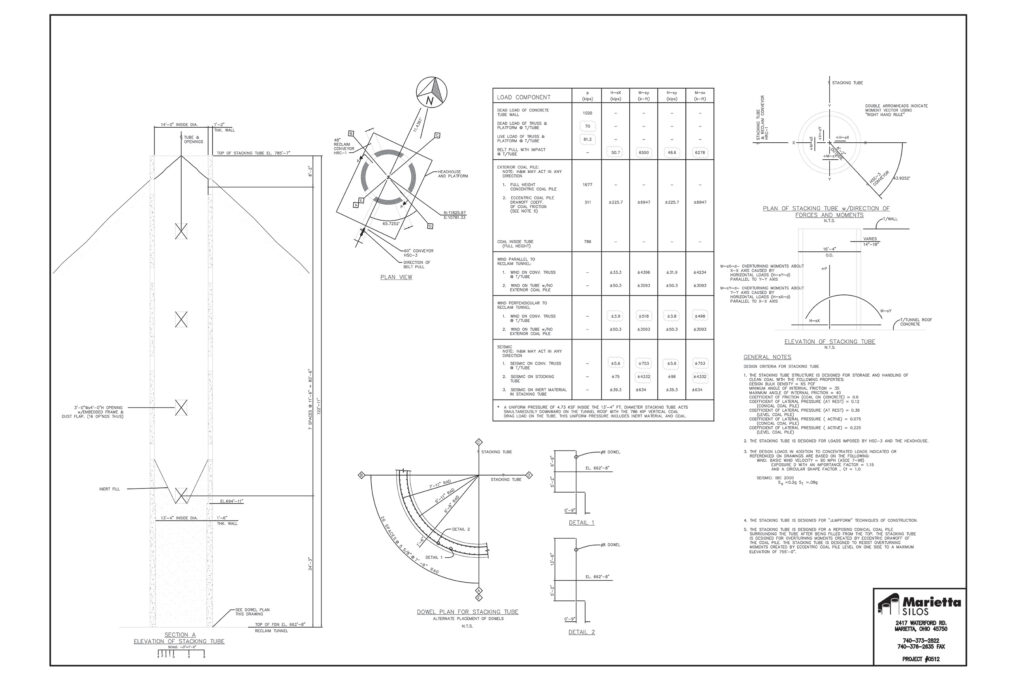
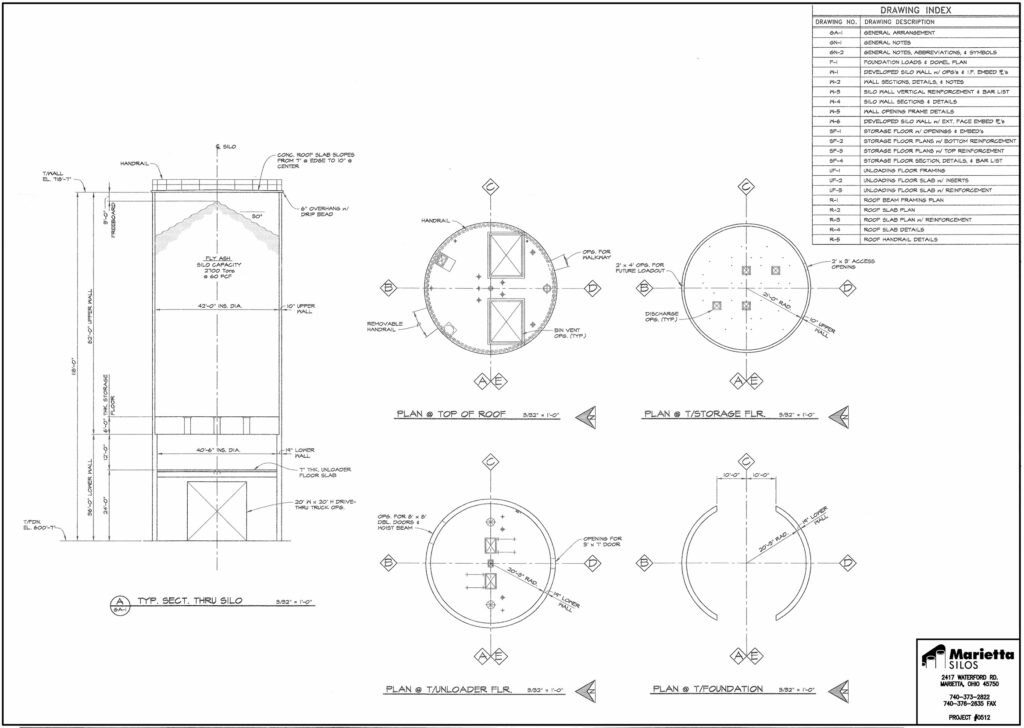
Selecting the correct silo size and configuration starts with understanding how your material behaves during storage and discharge. Different materials require different silo types, including flat bottom, cone bottom, mass flow, funnel flow, or expanded flow designs. Factors such as flowability, density, and moisture content all influence performance and overall efficiency.
If material behavior is unknown, a flow study can provide critical data to determine the most effective silo design and ensure reliable material handling. If you need additional guidance, our team can help evaluate your material and recommend the right solution.
To commission a new silo, start with a consultation to determine your storage material, size, and operational needs. Marietta Silos works with clients to design and engineer concrete or steel silos that meet performance, safety, and efficiency requirements, providing a clear plan before construction begins.
Silo design considers material type, storage volume, wall thickness, foundation, and safety features. Expert engineers calculate load, pressure, and environmental factors to ensure a structurally sound, durable, and efficient silo.
Silos require a reinforced concrete foundation designed to support the silo’s weight and stored material. Foundations must account for soil type, load distribution, drainage, and environmental conditions to prevent settling or structural failure.
Collapse is prevented through proper design, high-quality construction, regular inspection, and maintenance. Using correct materials, wall thickness, and foundation support ensures long-term structural integrity.
Silo size depends on storage volume, material type, and operational requirements. Marietta Silos prefers a 3-to-1 height-to-diameter ratio, though this may be adjusted in highly seismic locations. Engineers at Marietta Silos can calculate the optimal dimensions for your application, and silo sizing calculators are available on the Marietta Silos website as a starting point.
OSHA requires compliance with confined space safety, fall protection, structural safety standards, and proper maintenance. Following OSHA regulations protects workers during construction, inspection, and operation.
Silos collapse due to foundation failure, wall cracks, overloading, material bridging, corrosion, or, especially in the case of steel silos, extreme weather. Regular inspection and maintenance significantly reduce collapse risk.
Cracks are caused by foundation settling, temperature fluctuations, moisture infiltration, overloading, or construction defects. Early detection prevents structural failure and costly repairs.
Damaged silos are repaired by patching concrete cracks, reinforcing walls, replacing steel panels, fixing roofs, and applying protective coatings. Repairs restore structural integrity and extend service life.