
Mitigating the Risk of Silo Collapse
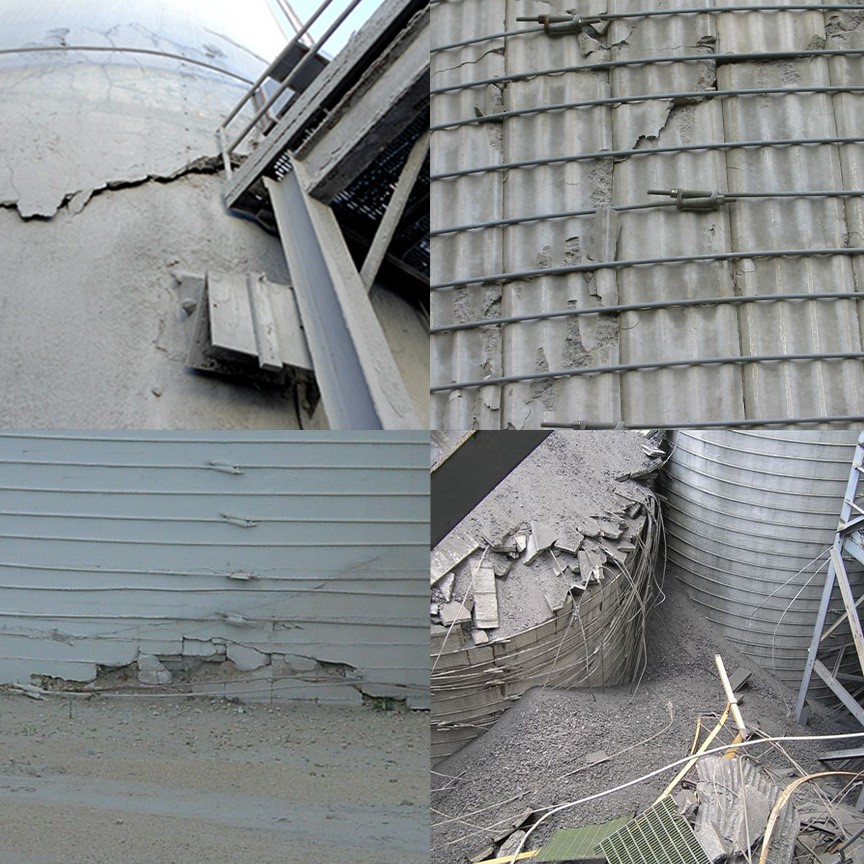
At a glance, a concrete or steel silo appears to be a static, engineered structure designed to handle extreme forces. In reality, a silo is a dynamic system that is constantly responding to material flow, pressure changes, moisture, and vibration. When silos are treated as set-it-and-forget-it assets, small structural issues can quietly evolve into catastrophic failures. Mitigating the risk of catastrophes like silo collapses and dust explosions requires understanding how these stresses develop and addressing them before they compromise the integrity of the structure. The Mechanics Behind Silo Collapses Silo collapses are rarely sudden or unpredictable. In most cases, they are the final result of long-term structural degradation. At Marietta Silos, we consistently see three primary contributors to structural failure. Asymmetrical Loading Silos are designed to withstand uniform internal pressure. When material accumulates unevenly along the walls or when discharge points become partially obstructed, lateral forces shift. Over time, this non-uniform loading can cause wall bulging, increasing the risk of buckling or complete collapse. Concrete Deterioration and Corrosion In concrete silos, moisture intrusion is one of the most serious threats to long-term structural integrity. When water reaches reinforcing steel, corrosion begins. As the steel expands, it fractures the surrounding concrete, leading to cracking, spalling, and delamination that steadily weaken the structure. Roof and Foundation Stress Structural stability depends on both ends of the silo. Foundation settlement can introduce a lean that redistributes loads throughout the shell, while excessive vacuum pressure during discharge can deform or damage the roof. Either condition places abnormal stress on the entire structure. Risk Management Starts With Professional Inspection The most effective way to mitigate the risk of collapses and explosions is through proactive structural inspection. Visual observations alone often miss early-stage deterioration occurring beneath the surface. Marietta Silos offers multiple levels of professional inspection, ranging from targeted visual assessments to comprehensive structural evaluations utilizing advanced tools, including AI-assisted defect mapping. These inspections identify developing issues early, allowing repairs to be planned rather than forced by emergency conditions. A small defect today can become a major failure tomorrow. Proactive inspection protects your structure, personnel, and operations. Proactive identification of structural issues is key to maintaining a safe facility. Schedule a Silo Inspection
Slip Form, Concrete Silos Inspection

Market: Manufacturing Material Stored: Raw materials in granular and powder form Silo Size: (4) 17′ x 75′; (4) 20′ x 75′ Issue: Exterior wall, spalling concrete exposing reinforcing steel. Project Background Silo engineer uses hammer during particular inspection technique, referred to as concrete sounding, to check for delamination of the exterior silo wall. Pictured above is an experienced silo engineer performing an exterior inspection of slip formed, concrete silos. Due to heavy usage, original design and potential construction issues the silos under inspection have significant spalling on the exterior walls exposing reinforcing steel in numerous locations. An in-process interior concrete silo inspection conducted by an experienced silo engineer. Safety is paramount, particularly during confined space entry. All silo entrants are trained on applicable OSHA & MSHA standards prior to arriving on-site. As shown above, the entrant can fit through an entry point on the silo as small as 18” square or 18” diameter. By removing an air duct, a professional can gain entrance to the silo interior and diagnose existing conditions. The silo engineer descending into the silo during interior inspection. Once inside, the engineer can ascertain many things about the silo. Using various industry specific methods for the inspection, a detailed report is completed with all the inspection findings. After the report is completed, all issues discovered are then prioritized and the customer is provided a proposal to repair the operational or safety deficiencies discovered. To maintain operational safety and silo efficiency, it is imperative to establish a routine silo inspection schedule.
Grout Finish on Two Clarifying Units – KY
Market: Power Material Stored: Bottom Ash in Water Silo Size: 72′ Issue: Needed smooth, top layer of grout on the bottom of two clarifier units. Project Background The bottom of the clarifying tank. Bottom ash is a by-product of a coal-burning power generation facility. After the coal has been consumed, bottom ash remains and must be removed from the bottom of the boilers which typically consists of various metals, slate, and rock. As you can see in the above image, the clarifying tank bottom is sloped to assist in the flow of the bottom ash solution. The tank bottom is made to specification, but with a 2” below grade so the grout can be added. The grout allows for a smoother finish for increased flow of the bottom ash. The finished product: a 4,000-pound PSI grout with a smooth finish. The large agitator arms coming off the center pole are part of the clarifier unit. Agitator arms are used to trowel the grout to the correct height and the correct slope of the clarifier. Once in use, the agitator moves around the bottom of the clarifier, keeping the bottom ash moving and preventing collection of solids on the bottom.
Post Tension Solution for Silo Damage Caused by Asymmetrical Flow – Arizona
Market: Manufacturing Material Stored: Coal Silo Size: Slip form, concrete silo 40′ x 107′ Issue: Cracking in the silo wall due to asymmetrical flow. Project Background A Marietta Silos silo repair crew is shown placing support strands around the exterior wall of a silo that has cracked due to interior pressure loads and an imbalance of load management. Once in place, these strands will be tensioned to meet professional engineering specifications for wall reinforcement. This project was initiated following an inspection that determined horizontal forces from an asymmetrical material flow caused the silo walls to crack. Once the strands are properly tensioned through a hydraulic process, steel lock couplers are positioned and tightened. Tension is a critical component in the silo repair, and is determined by a qualified engineer using such factors as silo size, stored material weight and how the silo is used. Once completed, the tensioning assures that the silo can be safety used. Shown: Concrete encasements are poured around the lock couplers for protection from the elements. Tensioned strands that surround the silo are encased in an ultraviolet resistant sleeve to prevent sunlight deterioration.
Somerset Wall Cracking and Spalling
Market: Coal Facility Material Stored: Washed Coal Silo Size: Jumpform, concrete silo 86′ x 176′ Issue: Significant wall cracking and spalling, requiring a liner installation. Project Background Project Background When a coal facility needed a new 80' diameter, 176' tall concrete silo for washed coal storage, Marietta Silos was presented with a new design and construction challenge. The original silo was a Slipform reinforced concrete construction. Its unloader portion spanned the first 24', with a 5' reinforced floor containing seven stainless steel cones to discharge coal onto a conveyor system for customer loadout. View of 80' Jumpform rig from inside the silo during construction. The project involved the design and construction of the first Jumpform cast-in-place reinforced concrete silo liner at this scale. Until now, Jumpform systems were limited to silos no larger than 65' in diameter. Expanding beyond that size required rethinking the entire rig engineering. While complex, the effort carried significant benefits to the customer as Jumpform silo construction is one of the most durable and cost-effective silo construction methods. Silo Details Over the course of two months, Marietta Silos' expert engineers redesigned and modified the proprietary Jumpform system to accommodate the expanded size. The result was a new platform, the largest Jumpform system in the industry, capable of supporting the construction and repair of silos up to 80' in diameter. The finished Jumpform silo construction operations. To keep the project on schedule and aligned with stringent quality standards, Marietta Silos partnered with local steel and stainless-steel fabricators. These partners produced all structural steel components and the seven stainless steel replacement cones. Local collaboration also extended to the concrete supplier, who assisted with mix design adjustments to ensure lasting strength and durability, quick set times, and consistent quality. Marietta Silos' project engineers determined that an exterior liner would require the demolition of adjacent structures and additional measures to address harsh winter conditions typical at the site. A reinforced interior liner was therefore selected for the project. The new liner design covered 132' of the 147' storage area, the portion exposed to the greatest stressors of loading and unloading. Conclusion Despite the complexity of redesigning the Jumpform system, the demanding schedule, and adverse weather, Marietta Silos successfully delivered the project. With the work completed, the redesigned silo is expected to deliver another 20 years of service. "Marietta was a great group to work with, very knowledgeable, and we look forward to working with them again." Customer & Site Project Manager.
New Fly Ash Concrete Silo Construction – Michigan
Market: Power Material Stored: Fly Ash Silo Size: 45′ diameter by 118′ tall Issue: Special engineering to accommodate large door openings. Project Background A fly ash silo with finished silo walls, roof, material floor and equipment floor. In the photo above, the silo walls, roof, material floor and equipment floor are finished. This silo is unique as the drive through doors are large for the overall diameter of the silo, thus creating the need for additional reinforcement to be placed inside the silo. Two additional columns to make up for the lack of continuous walls. The columns, pictured above, were an engineering addition to the silo design to make up for the lack of continuous walls carrying the stored material weight to the foundation. This allows for full access for the use of very large mine haul trucks to drive through the center for loading and recovering the fly ash. From this picture, you can also see the very thick, squared concrete beside the door openings. These unique design elements were implemented by a professional silo engineering firm to meet the special conditions requested by the client. Continuation of the column previously shown at the foundation level. This column goes from the foundation, through the equipment floor and adds additional support to the material floor. Also pictured is the continuation of the large square structures on each side of the door openings at the foundation. These additional support structures were required by the engineer design firm for structural integrity due to the lack of vertical walls created by the over-sized truck doors in a smaller diameter silo.
Construction of Two New Fly Ash Concrete Silos – Tennessee
Market: Power Material Stored: Fly Ash Silo Size: 45′ diameter by 141′ tall (Quantity 2) Issue: Two new fly ash silos needed for bulk storage. Project Background Construction of two fly ash storage silos in process. The picture above shows two fly ash storage silos during the construction process with the shoring to pour the bin floor through the large truck door penetration and the temporary stair tower for employee access to the work deck. The silo to the right has the walls completed while walls are still being poured for the silo to the left; the block-outs are still in place and the concrete forms are three high at the top of this silo. A closer look at the concrete forms. Individually the concrete forms are 4'x4' and connected together to form three rows around the silo for a total form height of 12’. Once the top form is poured and reinforcing steel is placed, the bottom 4’ form is detached and jumped to the top of the forms. This is known as ‘jumping a concrete silo.’ Also pictured is the continuous work deck inside the silo walls where employees tie vertical / horizontal reinforcing steel, place block-outs and penetrations and set the forms when jumping to the next level. This work deck is completely self-supported by nine masts that go down to the foundation, so none of the load is suspended. It moves vertically by hydraulics and utilizes a dual pin locking system in each pole to ensure safe operation and stability. Because this is a continuous work deck surrounded by the top form, it is exempt for the OSHA standard for fall protection. Completed fly ash silos. Pictured above are the structurally complete silos. The silo to the right has a permanent stair tower that provides roof access to the left silo via walkway. Equipment has not been placed on these silos yet, but they are ready to be put into operation. Initial design is critical in construction of a new silo for bulk material storage. From the foundation, up, it is imperative that a silo specific engineering group is involved to take into account all the factors associated with implementing a structurally sound, efficient structure.
New Construction of 2 Fly Ash Concrete Silos – West Virginia
Market: Power Material Stored: Fly Ash Silo Size: 40′ diameter by 113′ tall (Quantity 2) Issue: Required two new fly ash silos for bulk storage. Project Background Two structurally complete silos. Pictured above are two structurally complete silos. The silos have a shared stair tower between them for secondary access to the roof and equipment floor in the silos. The brown colored steel head house is used to enclose the equipment on the roof. While this equipment storage is very nice, it is also very expensive and creates significant additional weight to the top of the silo structure that must be considered during the silo design. There are other adequate and more economical ways to enclose the rooftop equipment. Initial design is critical in construction of a new silo for bulk material storage. From the foundation, up, it is imperative that a silo specific engineering group is involved to take into account all the factors associated with implementing a structurally sound, efficient bulk storage system into the process.
Cleaned and Coated 3 Limestone Silos – Texas
Market: Chemical Manufacturing Material Stored: Lime Silo Size: 26′ diameter by 50′ tall (Quantity 3) Issue: Cleaned and coated silos Project Background A concrete stave silo being coated with a specifically designed coating. Pictured above is a concrete stave silo. The Marietta Silos crew is using a specifically designed, cementitious coating with a bonding agent that will protect the steel galvanized hoops and prevent leakage. The employees are working off of a suspended work platform while wearing body harnesses as part of the fall protection, safety program. As time and the weather elements affect concrete stave silos, this coating seals and protects the concrete staves from moisture. Stave silo construction utilizes the steel galvanized hoops for the structural integrity of the bulk storage system. Not protecting them in the correct manner will negatively affect the hoops longevity. The three silos after being coated. In order to effectively repair or recoat a silo, the exterior must be thoroughly cleaned. It is very important to choose a company and engineering firm with experience in selecting a cementitious silo coating that will protect the steel galvanized hoops and prevent leakage. It is recommended that all silos are inspected periodically to insure their structural integrity, operability and safety.
New Fly Ash Concrete Silo Construction – West Virginia
Market: Power Material Stored: Fly Ash Silo Size: 46′ diameter by 110′ tall (Quantity 2) Issue: Desired two new fly ash silos for bulk storage. Project Background Two fly ash storage silos during the construction process. Pictured above are two fly ash storage silos during the construction process. The silos are structurally completed: walls, large truck door openings, equipment floor openings, roof with handrail around the perimeter and access ladders with platforms to the roof. To the left of the silos is the crane that is still onsite. Marietta Silos uses the crane during the construction process to lift structural steel, embeds and penetrations up onto the work deck where it can be easily accessed by the construction crew. The crane is also utilized for lifting a concrete bucket during wall construction. The concrete is poured into the forms in a circular pattern until the 4' forms are filled for that particular jump.