
Regular Professional Silo Cleaning
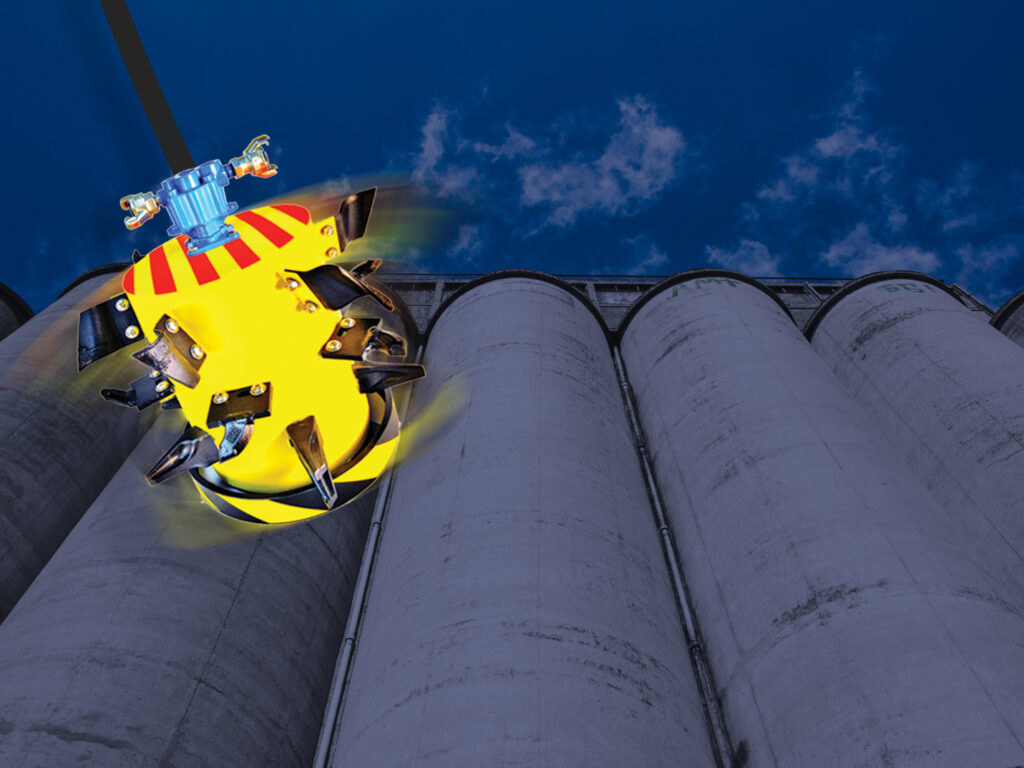
Regular professional silo cleaning is a necessary tool that ensures maximization of production while protecting employee safety. All too often, however, we postpone silo cleaning to delay the economic effects that downtime and lost production may bring. When regularly cleaned by a professional silo cleaning company, a silo yields maximum production while providing a safe working environment. So how do you have your silo regularly cleaned, minimize downtime and save money in the process? The USA Silo Service solution is employing The Boss proprietary silo cleaning method, which is 2/3 more powerful than conventional cleaning methods. Since The Boss moves more material per hour, our system delivers optimal cleaning quickly and correctly, resulting in less downtime and production loss, ultimately saving you money. So don't put off that silo cleaning any longer. Let The Boss silo cleaning machine and USA Silo Service help you get back on a regular silo cleaning schedule to maximize your efficiency, production and safety. Get a silo cleaning quote with The Boss.
Silo inspection Can Add Years to Your Silo
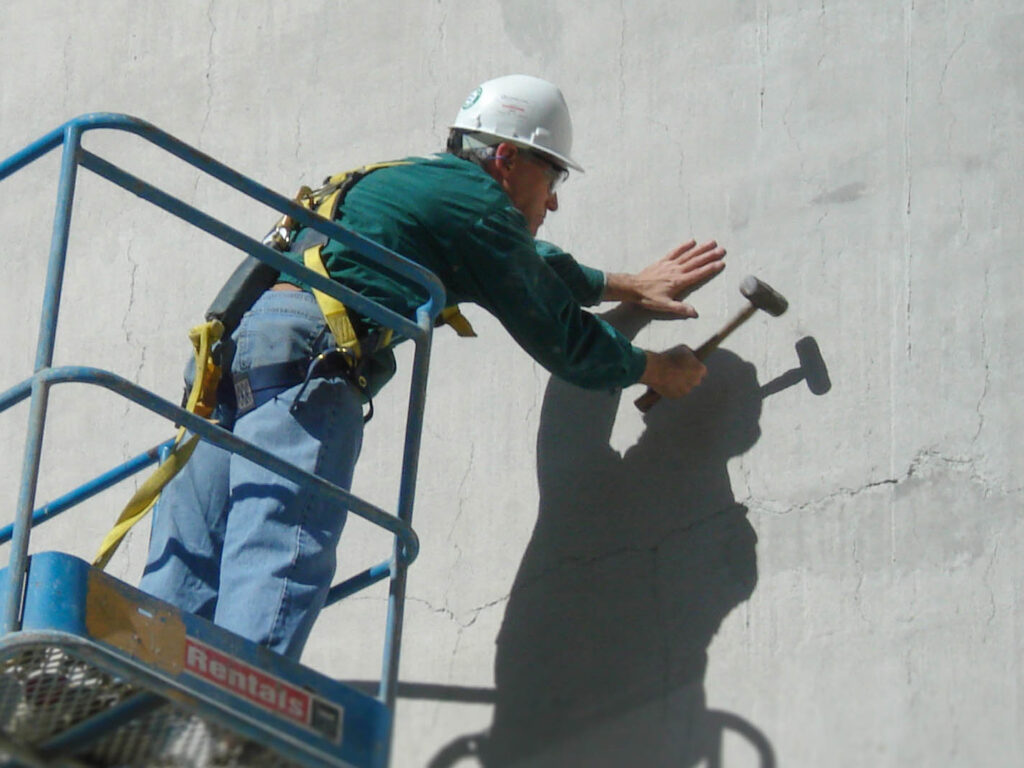
Preventive maintenance is crucial when it comes to silos. Failing to complete preventive maintenance is a leading cause of costly, dangerous silo failure. Addressing minor issues as soon as they arise helps keep the costs of silo ownership low as major repairs, emergencies and structural failures are more expensive up front, take longer to correct and inevitably result in unplanned downtime. So how do you know how to prevent major issues when maintaining your silo? While you can, and should, regularly examine your silo exterior for any signs of cracks, obvious damage or changes, professional silo inspection is the only way to identify essential preventive maintenance needs. Professional silo inspection covers more areas of the silo than an in-house inspection. Trained silo inspectors or silo engineers examine your silo(s) in-depth to look for serious issues and provide preventive maintenance suggestions that can help keep your silo in the best shape possible. We offer three different silo inspection levels to meet the needs of any industry. From basic and augmented to comprehensive silo inspection or any level supplemented with our AI inspection service, our silo inspection components include examining key areas of potential failures, such as foundations, walls and roofs. Prevention is the most effective method to ensure the integrity and continued operation of your silo. Regular maintenance and inspections can increase the life of your silo and ensure the safety of those working around your structures. Through inspection and maintenance, you increase the useful life of your silo, reduce unplanned downtime, and uphold production goals. What's more, the lack of silo maintenance is a leading cause of failure. The costs of keeping up with preventive maintenance are significantly lower than the price of major repairs or construction after a structural failure. Plan Your Next Silo Inspection
Clogged Silos Impact Efficiency and Profitability
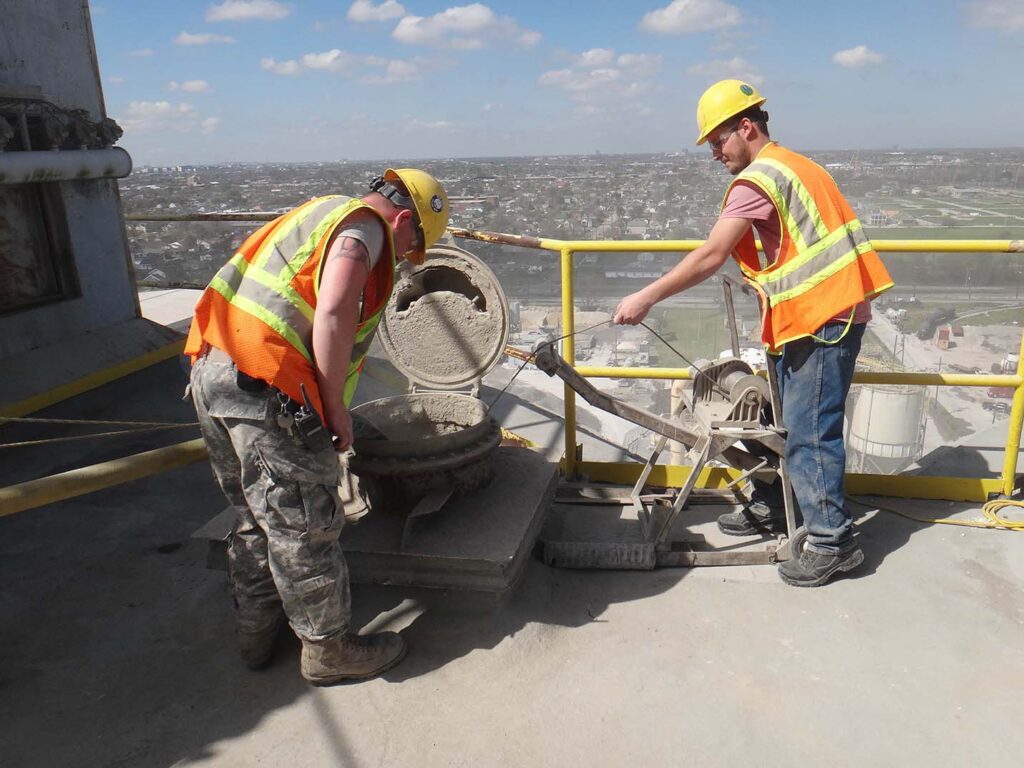
While silo cleaning may initially seem like a silo cost of ownership you need to factor, it can save you money and help you stick to production schedules. A clogged silo can cause several problems that impact efficiency and lead to reduced profits. When stored material becomes compacted or builds up on interior walls, it can prevent a silo from reaching its full storage capacity. Once a silo begins to lose flow, this accelerates the buildup over time and can lead to additional blockages. Clogged or slow running silos signify that material is not properly flowing through the silo. In addition to reducing storage capacity and slowing production, this also jeopardizes the silo's structural integrity. Proper material flow through the silo is critical to the longevity of the structure. Poor material flow can create a range of problems in loading/unloading efficiency, uneven internal loading and even lead to wall failure due to unequal pressure distribution. Proper cleaning and care will increase your silo's useable lifespan and minimize big-ticket repair and cleaning costs. It can also allow you to recover stagnant material that has built up inside the silo. In short, material flow issues don't just hamper productivity; they can also lead to silo damage or failure. When it comes to saving costs on your silo cleaning, it doesn't pay to wait. There are few things as expensive as unplanned downtime. USA Silo Service is your go-to silo cleaning company for expert silo cleaning. Our team of experts is equipped with the industry's best silo cleaning techniques and proprietary equipment, so the job is done quickly and correctly. No matter your silo type or stored material, we clean it all. USA Silo Service also provides vacuum truck and material disposal services to assist in removing and relocating silo debris. Get a Silo Cleaning Quote
Maintain Fluidizing Equipment in Your Silo or Dome
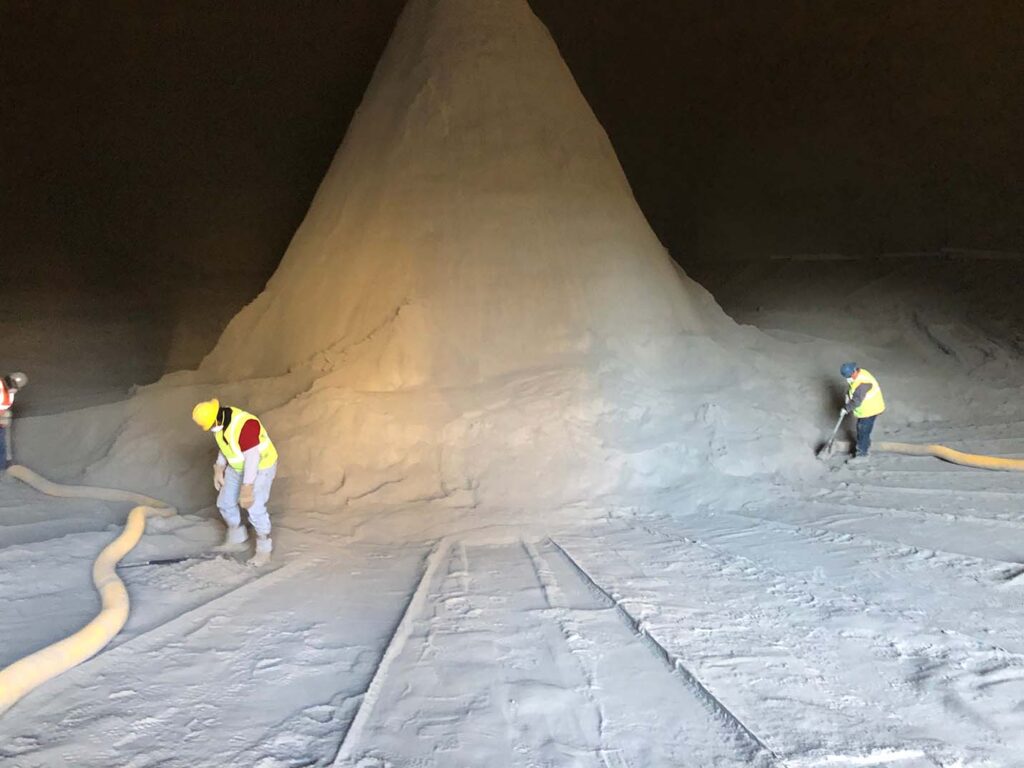
USA Silo Service provides silo cleaning and maintenance services that help prevent future emergencies and keep your silo functioning as it should to save you money and help you keep up with your production goals. Proper care of your fluidizing equipment, including air pads/air pad diffusers, air stones and air slides, is a crucial part of necessary silo maintenance. If your airflow unit shows signs of wear, it's time to request a quote to ensure the material flow of your stored dry solids is optimized. Whatever the issue, we will ensure the reliable flow and discharge of materials, prohibiting any issues of blockage or compacting. When you contact us for help, we consider all aspects of your situation, including the types of materials stored, the condition of your silo and the difficulties you may be facing to determine the best course of action for your airflow needs. No matter the issue, we will get your silo performing at 100% again. Schedule your Silo Maintenance
How It’s Made, Slipform Silos | Marietta Silos
Following the rise of concrete in the early 1900s, silo construction methods began to expand rapidly from silo cellars to concrete stave silo construction. This silo construction method was followed closely by the development of slipform concrete silo construction. This concrete construction method enabled the creation of a continuous structure that was free from joints and seams. Today, slipform concrete silos are constructed much like they were when the method first appeared. First, a custom-built form system for both the silo interior and exterior is constructed. This includes an interior work deck as well as interior/exterior finishing scaffolding. The form is supported by jack rods that are attached to hydraulic jacks. As the concrete is poured for the silo walls, the form is raised at approximately one foot per hour until the structure is finished. Construction of slipform silos requires an around-the-clock construction schedule as the silo must be finished before construction is halted. The finished product has a smooth outer finish, thanks to the continuous pouring of the concrete silo walls. Slipform construction is usually the method of choice for concrete silos that are more than 65' in diameter, or several concrete silos need to be constructed at once. Begin Your Silo Project
Keep up Your Silo Cleaning Routine
There are numerous benefits to keeping up with routine silo cleanings. Regular silo cleaning ensures efficient operation and can help limit potential liabilities. Regular cleanings also increase your silo's usable lifespan, minimize big-ticket repairs, and help you avoid more costly cleaning expenses that can result from emergency situations. Hung up, clogged or slow running silos are a problem that will interfere with efficiency and profitability. In addition, material buildup deters the silo from reaching its full capacity. We have seen many cases where material buildup and blockages make it so a silo or silos can only store roughly half of the original capacity. Once a silo begins to lose flow, this accelerates the buildup over time and can lead to additional blockages. Therefore, the silo must be cleaned professionally if material buildup or other issues are visible. Benefits of Routine Silo Cleaning Safety – A clean silo is the first step in protecting your stored materials, your silo's structural integrity, and your workers. Savings – Removing material buildup returns your silo to the original, full capacity, helps you recover lost material that can be sold, and helps you stick to production schedules. Scheduling – Sticking with a routine cleaning schedule lets you plan around your peak seasons and find a time that works best for you and minimizes downtime. Schedule Silo Cleaning with the Pros USA Silo Service is your go-to silo cleaning company for expert silo cleaning. Our team of experts is equipped with the industry's best silo cleaning techniques and proprietary equipment, so the job is done quickly and correctly. No matter your silo type or stored material, we clean it all – including storage domes. So, when was your last silo cleaning? Schedule now and get back on track. Get a Silo Cleaning Quote
How are Stave Silos Constructed? | Concrete Stave Silos Explained
What is a concrete stave silo? Though silos now regularly dot both agricultural and industrial landscapes throughout North America, they have only been in use since the late 19th century. From their origins as silo cellars that were dug into the ground to the first vertical silo developed in the early 1880s, silo construction methods have changed a great deal over time. Materials & Components Used in Stave Silo Construction Early tower-style silos lacked their now-signature round shape and were often constructed of either wood or stone. Structural issues with these rectangular designs, including corner air pockets that allowed for spoilage, high susceptibility to bowing from internal pressure, and susceptibility to wind damage, quickly lead to developments. Silos constructed with a round design were found to withstand pressure from stored materials better. History of Concrete Stave Silos By the 1900s, concrete became a common construction material and opened the doors to concrete stave silo construction methods still used today. Since developing the technology used for concrete stave silos in 1920, Marietta Silos has remained an industry leader in construction, inspection, and restoration. Concrete stave silos are constructed using precast concrete blocks, or staves, that are at least 2" thick and interlock. These staves are reinforced with exterior galvanized steel hoops that provide the necessary tension to compress silo walls and ensure structural integrity. Marietta Silos relies on more than 100 years of concrete stave silo construction experience to design and build superior stave silos. We're also the only company in the U.S. that produces staves that are 5 ¾" thick for increased durability. Concrete stave silos from Marietta Silos offer versatility and flexibility, as well as economy. We can design concrete stave silos with many discharge types, including cone, flat floor, side discharge, and tunnel discharge. Start your concrete stave Silo Construction
Clear Away Your Built-Up Silo Debris
When your silo suffers from built-up debris, your operations can be slowed or stopped and your storage capacity greatly reduced. Build-up also leads to poor material flow characteristics that can lead to increased strain on silo walls and cause cracking and other damage that can result in structural failure. Yet, removing material build-up through professional silo cleaning does more than protect your silo and save you money long-term. It can also pay for itself or even put money back in your pocket. Removing your material build-up allows you to recover lost material that can then be sold. USA Silos removes debris and relocates it during the silo cleaning process through our high-performance industrial vacuum truck services. We then assess recovered material for usability and handle it accordingly. As a result, useable materials can be sold while lost materials are properly disposed of by us. This lets you reap savings through recovered stagnant material that was previously written off. Once professionally cleaned, silos can return to running at full, original capacity, allowing maximum efficiency and leading to more consistent production schedules with no unplanned downtime. In short, the benefits of a professional cleaning every year far outweigh the initial costs. Whether you have bridging, caking or plugging of any stored material, it’s essential to contact silo cleaning company USA Silo Service, a division of the Marietta Group, which includes Marietta Silos and Marietta Inspection Services, to have the build-up removed quickly. Our silo cleaning techniques utilize The Boss proprietary cleaning system, which delivers maximum cleaning efficiency in a safe environment while minimizing downtime and delivering cost savings to the customer. To learn more, be sure to check out our full library of videos on silo cleaning, construction, inspection, and repair on
Don’t Put a Wall Between Your Silos Inspection
Regular silo inspections and routine silo maintenance help you increase the useful life of your silo, reduce unplanned downtime, and uphold production goals. In-house examination of the silo exterior is a good start in making sure silo walls are sound, but it should never replace a professional inspection. Silo walls undergo an enormous amount of stress horizontally and vertically during their normal useful life. This stress can result in cracks or, for stave silos, offset stave joints. Cracks can allow moisture intrusion into the silo and cause additional issues inside. They can also signify delamination, which can compromise steel reinforcement integrity and lead to structural failure. Determining the severity of exterior wall damages is an easy task for professionals. Yet, there can be limitations due to site hazards or other obstacles that can make visibility a challenge. Artificial intelligence (A.I.) supplemental inspections, offered exclusively by Marietta Silos, remove any guesswork when it comes to exterior silo inspection. Drone capture technology allows faster, more accurate exterior inspections by obtaining images and videos of the entire silo or bulk storage container exterior. These images are then run through A.I. algorithms that can detect even small defects (smaller than 0.1 mm) and map the precise location onto the captured silo image for future examination. Learn more about Artificial Intelligence, 3D Damage Tracking Silo Inspection in our video or view our full library of videos on silo inspection, silo maintenance, and silo restoration on
Save By Leak Proofing Your Silo
Silos are unique structures, and waterproofing coatings are not created equal. Silo coatings like floating membranes and roofing tar are some of the cheapest to acquire. However, they are also the most likely to fail during the normal use of a metal or concrete silo. Membranes are easily punctured during routine loading and unloading or even through heavy foot traffic. Roofing tar, on the other hand, cannot tolerate foot traffic. Tar also naturally softens by the sun, allowing stored material to stick into the surface and create buildup that is extremely difficult to remove. In cold weather, tar solidifies and can easily crack and allow moisture to penetrate the silo and jeopardize stored material. Sprayed polyurethane coatings similarly do not tolerate foot traffic, are easily punctured and are sensitive to humidity. The most effective, monolithic barrier against moisture is a rubberized coating that bonds directly to various surfaces to repair cracks and seal penetrations, laps and fasteners. Rubberized coatings have a high elasticity coefficient that moves with silo vibration caused by roof-mounted equipment or loading and unloading. Our rubber coating reduces costly reapplications of surface protectants and can be applied to many surfaces. As a silo roof coating, our rubber coating can fix both metal silo roofs and concrete silo roofs. In addition, our silo roof-top coating has the flexibility to maintain its integrity through the changing seasons, protect against oxidation, humidity and corrosive environments while resisting alkali, salts, abrasions and fumes. Rubber Roof-Top Coating Works On: Metal buildings and roofs Built-up roof (BUR) membranes Grain silos and bins Silo exterior walls Single-ply roofs Urethane foam roofs Steel bolted joints Concrete silo roofs Additional Benefits of Rubberized Silo Coatings: Not a floating membrane Offers excellent adhesion to aluminum, galvanized steel, painted surfaces, modified bitumen, steel joints and many other surfaces Excellent in sealing cracks, laps, fasteners and roof surface penetrations Available in all 50 states and a variety of colors Our roof-top silo coating method is a proven industrial roof coating system that keeps elements out and stored materials dry. Request a quote from us today.